



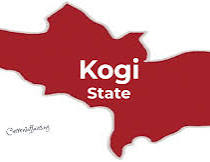
The attempt by Engr. J.A. Toye to present the constitutional and judicial history of Kogi State constituencies as though the matter concerns only Kogi West is not merely uninformed. It is a dangerously reductive distortion of a constitutional question that affects Kogi Central, Kogi West and Kogi East alike. Let us therefore dispense with the self-important posturing, the gratuitous sermonising and the obnoxious intellectual arrogance masquerading as constitutional enlightenment. First, nobody disputes that INEC is implementing court orders. That is precisely the point. But the intellectually dishonest leap is the assertion that “if there are suppressed constituencies in Kogi East, go to court”, as though Kogi East has no judicial foundation whatsoever and as though the court-ordered restoration exercise is exclusively a Kogi West affair. That proposition is demonstrably false. Reports concerning the Federal High Court judgment in Suit No. FHC/LKJ/CS/01/2026 state that the court declared the suppression of several Kogi State constituencies unlawful and directed INEC to restore them. Crucially, the affected constituencies were reported across Kogi Central, Kogi West AND Kogi East. So what exactly is the basis for telling Kogi East to “go to court” as though the constitutional grievance has never reached the judiciary? That is not constitutional scholarship. It is selective narration of the law designed to manufacture a false impression of legal helplessness. The Constitution itself demolishes this shallow argument. SECTION 91 of the 1999 Constitution provides for the composition of a State House of Assembly in a manner designed to reflect, as far as possible, nearly equal population. More specifically, SECTION 112 imposes upon INEC the constitutional responsibility to divide every State into State Constituencies in accordance with the constitutional formula, while SECTION 113 requires the boundaries of those constituencies to be such that their populations are, as nearly as practicable, equal to the population quota. And SECTION 114 provides for periodic review of State constituencies, including alteration where constitutionally warranted. These are not political favours. They are constitutional obligations.
Therefore, the question is not whether Kogi East should receive some benevolent political gift from INEC. The question is whether the constitutional architecture governing representation has been faithfully applied throughout the State. Indeed, INEC itself has publicly acknowledged that the present restoration exercise is pursuant to judicial judgments. In August 2026, the Commission restored Yagba West II in Kogi State, expressly stating that the restoration followed court judgments directing the reinstatement of previously suppressed constituencies. Nobody quarrels with that. What is objectionable is the attempt to transform the implementation of one aspect of a broader judicial process into a political morality tale in which Kogi West is portrayed as having acted lawfully while Kogi East is casually instructed to “go to court.” Go to court for what? For a matter reportedly already addressed by a judgment covering suppressed constituencies across the three senatorial districts? That is precisely where the argument collapses under the weight of its own contradiction. If there is a dispute concerning the scope, interpretation, implementation or sequencing of the judgment, the proper response is to interrogate the judgment, the enrolled order, INEC’s implementation documents and the constitutional provisions governing constituency delimitation. It is not to dismiss an entire senatorial district with a condescending command to “go to court.”
And let us be absolutely clear about another matter. Calling attention to unequal or discriminatory implementation of constitutional representation is not ethnic hatred. There is nothing ethnically inflammatory about demanding compliance with Sections 91, 112, 113 and 114 of the Constitution. There is nothing tribalistic about demanding that a judicial declaration affecting Kogi State be implemented according to its actual terms rather than according to somebody’s preferred geographical interpretation. Indeed, weaponising the language of “ethnic division” against legitimate constitutional advocacy is itself a dangerous attempt to silence lawful dissent. Kogi East does not need lessons in civility from anyone who begins by misstating the legal landscape. We need the judgment. We need the enrolled order. We need the INEC implementation framework. We need the constitutional provisions. And above all, we need equal application of the law. Let nobody confuse verbosity with erudition, indignation with authority, or self-confidence with knowledge of constitutional law. The Constitution does not operate according to geographical sentiment. It does not say that one part of Kogi should obtain constitutional justice while another part must first beg for the privilege of being heard.
The rule is simple: Where a constitutional right exists, it is not a favour. Where a court has issued an order, it is not optional. And where an administrative authority is implementing a judgment, it must implement the judgment according to its actual legal scope. So before lecturing Kogi East about “checking the book,” perhaps the author should first read the Constitution, examine the judgment, study the order and ascertain precisely which constituencies the court ordered to be restored. That is where the facts are. Not in the rhetoric. Not in the insinuations. And certainly not in the egomaniacal, delusional and opprobrious façade of constitutional expertise displayed in that unfortunate intervention. Kogi needs facts. Kogi needs justice. Kogi needs constitutional fidelity. And Kogi certainly does not need manufactured legal narratives masquerading as enlightenment.
Ojoachele cares