




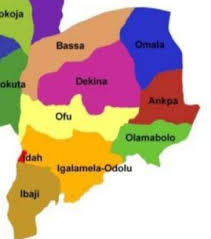
Kogi East, the homeland of the Igala and Bassa people, remains one of the most blessed regions in Kogi State in terms of population, landmass, history, culture, and political potential. By every reasonable political calculation, Kogi East is a giant. It possesses the numerical strength and electoral influence that should naturally place it at the center of political decision-making in the state.
Yet, despite this enormous advantage, Kogi East has increasingly found itself playing the role of a political tool rather than a political determinant. The painful reality is that a region that should be shaping the political direction of Kogi State often ends up being used to advance the interests of others.
Politically, Kogi East is comparable in strength to Kogi Central and Kogi West combined. This is not merely a matter of sentiment but a reflection of demographic and electoral realities. Such a position should ordinarily command respect, bargaining power, and strategic influence. Unfortunately, the region has not fully translated its numerical strength into collective political power.
The question is: why?
The answer lies largely within ourselves.
Over the years, personal ambition has often taken precedence over collective interest. Selfish political calculations have repeatedly weakened the region’s ability to speak with one voice. Rather than pursuing a common agenda, many leaders and political actors have chosen personal gains over the long-term interests of the people. As a result, Kogi East has become vulnerable to manipulation and division.
History teaches us that no people can remain politically relevant when they are divided against themselves. External forces can only exploit divisions that already exist internally. When brothers fight one another for individual benefits, the entire community loses. When political loyalty is determined by immediate rewards rather than strategic interests, the future of the region is placed at risk.
Perhaps the greatest danger is not what is happening today but what may happen tomorrow if nothing changes. If we consider the current situation disappointing, future generations may inherit an even worse reality. Our children and grandchildren may find themselves asking why a people blessed with such strength and numbers failed to secure a prosperous political future for them.
The responsibility therefore falls on the present generation to change the narrative.
Kogi East must begin to think beyond party lines, individual ambitions, and temporary political appointments. While political parties will always exist, the collective interest of the people must remain paramount. Unity does not mean everyone must belong to the same political party; it means recognizing that there are certain interests that transcend partisan differences.
The Igala people have a rich history of leadership, courage, and political relevance. The region once commanded attention and respect across Nigeria because its leaders understood the importance of protecting collective interests. That spirit must be revived.
The future of Kogi East will not be secured by political insults, unnecessary rivalries, or personal battles. It will be secured by unity, strategic thinking, mutual respect, and a shared commitment to the advancement of the people.
A giant does not become small because of a lack of strength; it becomes small when it forgets its strength. Kogi East remains a giant. The challenge before us is whether we will continue to allow ourselves to be used as a political tool or rise once again as a decisive force in shaping our own destiny.
The choice is ours, and the time to make that choice is now.
Written by;
*Hon Abubakar Abdullahi.*