



In a recent interview on a national TV, former Governor of Lagos State and former Minister for Power, Works and Housing Raji Fasola made an attempt to defend President Bola Ahmed Tinubu’s electricity reforms by claiming that the president never promised Nigerians 24-hour electricity.
In a statement signed by Richard Nnanna Ihediwa
Director of Strategic Communications
Makinde-Daura Presidential Campaign Organization said
Fashola’s denial of the clear promise by the President is not only embarrassing but also shows how low All Progressives Congress (APC) leaders can descend to in the attempt to hoodwink Nigerians.
For the avoidance of doubt, we will reproduce President Tinubu’s exact words:
“Whichever way, by all means necessary, you must have electricity. And you will not pay for estimated bill anymore. A promise made, will be a promise kept. If I don’t keep the promise and I come for a second term, don’t vote for me, unless I give you adequate reasons why I couldn’t deliver.”
A breakdown of President Tinubu’s promise goes as follows, “You must have electricity” “You will not pay estimated bill anymore”. The question is, Has President Tinubu kept his promises?
Since his assumption of office in 2023, President Tinubu’s electricity reforms have barely moved a needle. The President continues on empty boasts of electricity reforms and interventions in infrastructure, metering and market governance. What has been the result?
Under President Tinubu’s ineffective watch Nigeria’s electricity crisis continue to worsen with Nigeria leading in worlds energy deficiency where estimated 86.8 million citizens still not having access to public electricity connection -the highest deficit globally-with no hope in sight given the consistent collapse of the national grid.
In Fashola’s attempt to defend President Tinubu’s failed assertion that Nigerians “will not pay estimated bill anymore, he claimed that he does not have the numbers.
Simple research would have shown him that according to the NERC, 4.70 million electricity customers in Nigeria remain without meters and are still exposed to estimated billing. Again, President Tinubu did not keep his promise.
Fasola was quick to tell Nigerians that the President punctuated his promise with a caveat. So, what are the adequate reasons the administration has given for not keeping its promise. Tinubu apologists are always in a hurry to point to infrastructure constraints, legacy debts and the responsibilities of privately operated distribution companies. But these were the same reasons that existed before President Tinubu made the promise.
President Tinubu has continued reforms, signed laws but we have little evidence that this has impacted availability of electricity for Nigerians.
Our review of the NERC’s May 2025 Performance Improvement Plan order for the Transmission Company of Nigeria and the Nigerian Independent System Operator shows that only ₦1.7 billion had been disbursed for eight projects between January 2024 and January 2025.
It also indicates that only 45% of approved funding for 2024 had reached the dedicated account while identifying other problems such as procurement-clearance delays and inadequate prioritisation as having delayed the project. in fact, the revised core portfolio fell from 142 projects to 50.
In fact, instead of resolving the issues with the national grid, President Tinubu moved Aso Rock off the national grid and into a solar powered electricity system. We cannot find a better definition for cluelessness and lack of commitment to promise made.
From all indications, the Tinubu administration is in above its head when it comes to solving electricity problems and no amount of defense for failure by Fashola or any other person for that matter, can turn on a light bulb.
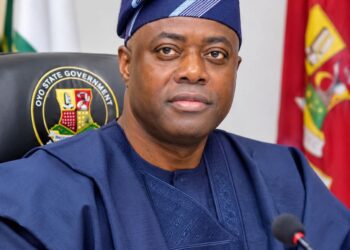
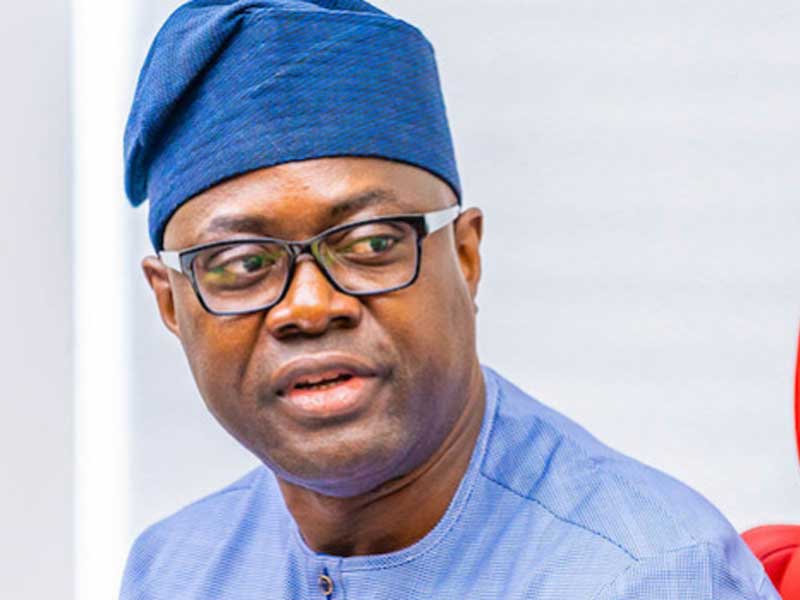
What is required is action. Nigeria’s problem is not simply generating electricity, or distribution, it requires a value chain approach and this is what the Allied Peoples Movement (APM) and its Presidential Candidate, Engr. Seyi Makinde offer with the RESET Nigeria Agenda.
Engr. Makinde, an Electrical Engineer, has already mapped out strategies to lift Nigeria from the current electricity crisis. In the Reset Nigeria Agenda, the electricity proposition is to improve the reliability and stability of supply within three years by connecting decisions, funding and accountability across the complete delivery chain. The Reset Agenda will move from creating new project lists to ensuring that projects are implemented.
We therefore counsel former minister and other Fashola to stop ridiculing themselves but be courageous enough to accept President Tinubu’s manifest failures. Fashola should display statesmanship by supporting Engr. Makinde, whose RESET Agenda offers credible alternative to President Tinubu’s lethargi,c, clueless and ineffective government.