


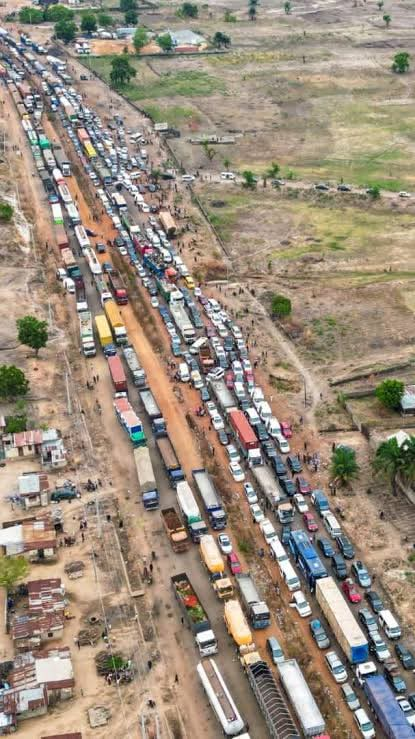
By Hon. Solomon Agada
The prolonged construction and rehabilitation of the Abuja–Lokoja Highway have raised serious questions about public accountability, contractor efficiency and the management of Nigeria’s critical infrastructure projects.
The situation presents a disturbing governance question: Is the persistent delay on this important national highway simply a reflection of contractor incompetence and poor project management, or has the road project become a convenient source of financial benefits for political bureaucrats and some officials within the Ministry of Works?
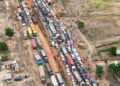
A major federal highway connecting the nation’s capital to several important commercial and economic centres should not remain a permanent construction site. Yet, for years, motorists, commuters, transport operators and other road users have continued to endure unnecessary hardship, traffic congestion, damaged vehicles and avoidable risks to their lives.
The Nigerian people deserve more than repeated promises, contract announcements and inspection visits. They deserve results.
THE EVIDENCE POINTS TO A SYSTEMIC FAILURE
Several reported developments surrounding the Abuja–Abaji–Lokoja highway raise legitimate concerns about the management of public infrastructure projects.
1. A PROJECT SPANNING DECADES
A 2021 report by the Fiscal Responsibility Commission reportedly documented a section of the Abuja–Abaji–Lokoja road that was originally awarded in 2006 at approximately ₦11.99 billion. By 2020, the contract sum had reportedly increased to over ₦34.16 billion, yet the project remained unfinished.
This development raises fundamental questions about contract administration, cost variations, project monitoring and the effective utilisation of public funds.
2. QUESTIONABLE CONTRACTOR PERFORMANCE
In January 2026, a contractor handling a 47.862-kilometre section of the highway was reportedly said to have achieved only 10.21 per cent completion despite the expiration of 66.67 per cent of the contract period.
More disturbing was the reported payment of approximately ₦18.1 billion to the contractor.
If these figures are accurate, Nigerians have every reason to demand an explanation. How can such a significant amount of public money be committed to a project with such a low level of physical progress?
3. REPEATED CONTRACT TERMINATIONS
In November 2025, the Federal Ministry of Works reportedly terminated five road contracts in Kogi State over poor performance, unacceptable delays and excessive time overruns.
While terminating underperforming contracts may demonstrate a commitment to accountability, the bigger question remains: What measures were taken to prevent these failures in the first place?
Were the contractors properly evaluated before the contracts were awarded? Were they adequately supervised? Who approved payments despite unsatisfactory performance?
4. THE PROBLEM PERSISTS
In September 2026, officials of the Federal Road Safety Corps were reportedly still expressing concerns over contractors’ failure to provide adequate alternative routes and properly manage traffic during construction.
This is not merely an engineering concern. It is also a public safety issue.
Road construction must not become an excuse for exposing motorists to unnecessary danger, prolonged traffic gridlock and avoidable accidents.
IS THE HIGHWAY A CASH COW FOR POLITICAL BUREAUCRATS?
This is perhaps the most uncomfortable question surrounding the project.
It would be irresponsible to accuse political officeholders or Ministry of Works executives of personally benefiting from the prolonged construction without verifiable evidence. However, it would equally be irresponsible for public officials to ignore the financial and administrative questions raised by years of delays, repeated contract variations, escalating costs and unsatisfactory performance.
Such circumstances create opportunities for financial irregularities, procurement abuse and questionable contractual practices.
The Ministry of Works cannot absolve itself of responsibility by placing the entire blame on contractors.
The Ministry is responsible for contract administration, supervision, certification of completed work, approval of variations and recommendations for payments. Consequently, its leadership must demonstrate that these responsibilities have been discharged transparently and effectively.
Where contractors fail to deliver, the supervising authorities must also be questioned.
Public accountability must extend beyond the construction companies to include every government institution and official responsible for the award, supervision and administration of these projects.
MY VERDICT: A FAILURE OF INSTITUTIONAL ACCOUNTABILITY
The Abuja–Lokoja Highway has become a glaring example of the challenges confronting infrastructure delivery in Nigeria, particularly where contractor inefficiency, weak institutional oversight and inadequate public accountability intersect.
The questions Nigerians should be asking are straightforward:
How much public money has been committed to the Abuja–Lokoja Highway since the commencement of the various projects?
How much of the money released has translated into completed and usable road infrastructure?
Who approved the repeated contract variations, extensions and additional financial commitments?
What level of accountability exists for contractors who receive substantial payments but fail to deliver according to agreed contractual terms?
What sanctions have been imposed on officials responsible for poor supervision and ineffective contract administration?
Why should Nigerian taxpayers continue to bear the consequences of administrative failures and contractual inefficiencies?
These questions deserve clear answers from the Federal Ministry of Works and other relevant government agencies.
NIGERIANS DESERVE RESULTS, NOT ENDLESS PROMISES
A road project should be measured by the kilometres completed, the quality of infrastructure delivered, the safety of road users and the positive impact on the economy.
It should not be measured by the billions appropriated, the number of contracts awarded, the frequency of inspection tours or the promises made by political officeholders.
The Abuja–Lokoja Highway is too important to the nation’s economic development to be subjected to endless delays and questionable project administration.
The Federal Government must therefore conduct a comprehensive and transparent review of the project’s financial records, contract awards, variations, payments and actual level of completion. Where evidence of misconduct or negligence is established, appropriate sanctions should follow.
And perhaps the most uncomfortable question remains:
If contractors can repeatedly fail to deliver, government officials can repeatedly extend or re-award contracts, and new completion dates can be announced without demonstrable consequences for those responsible, who exactly is benefiting from this system—the Nigerian people or those who profit from the endless cycle of road construction contracts?
The Nigerian people deserve an answer. More importantly, they deserve a completed highway.
*Confluence News Reporting from Lokoja, Kogi State*