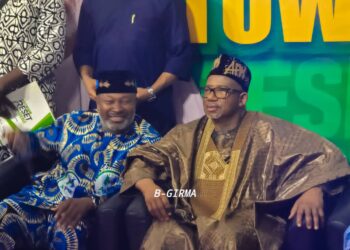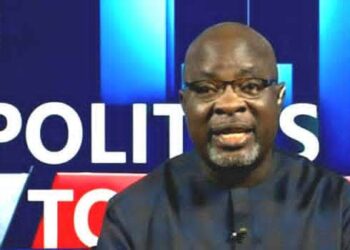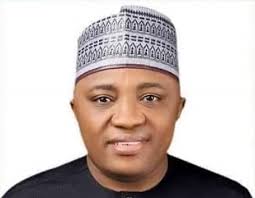



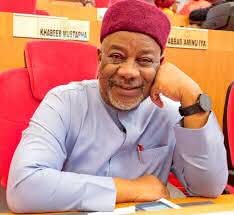
Senator Mohammed Ogoshi Onawo (Ciroman Doma, Turakin Doma) has spent more than two decades in public office without losing the connection that first took him from Doma to the Nasarawa State House of Assembly, the National Assembly, and now the Senate.
As he steps forward on the Allied Peoples Movement (APM) platform to seek the governorship of Nasarawa State in 2027, his record offers a clear case: experience grounded in delivery, not just rhetoric.
FROM DOMA TO THE NATIONAL STAGE
Born in Doma in 1952, Onawo rose through the ranks as a two-term member and Speaker of the Nasarawa State House of Assembly (2003–2011).
He later served two terms in the House of Representatives, chairing the Committees on Industries and on Information and Communication Technology.
In 2023 he won the Nasarawa South Senate seat on the PDP ticket, defeating a former two-term governor. That victory was built on local knowledge of Awe, Doma, Keana and the rest of the zone.
His recent party moves—from PDP to ADC and then to APM—reflect a politician who has chosen platforms he believes can deliver rather than remaining in structures he sees as constrained by crisis or lack of internal democracy.
He has framed the latest switch as a decision to focus on service and a higher office.
A RECORD OF TARGETED DELIVERY
In the Senate, Onawo has concentrated on infrastructure, water, education, skills and institutional reform:
– He helped secure ₦1.94 billion in the 2024 budget for the long-neglected Lafia–Doma–Rutu–Bassa–Rafin Gabas–Nasarawa–Ara–Orozo federal road, a route gazetted decades earlier but chronically underfunded.
– He has pushed for resuscitation of the Doma Dam to improve water supply and support dry-season farming.
– Constituency efforts include solar-powered boreholes, classroom blocks with solar power at Alago Unity Science and Technical College in Odobu, an 8km road in Doma LGA, youth and women empowerment programmes (including skills training and sewing machines), teacher training partnerships, and facilitation of federal employment for constituents.
– He sponsored bills for a National Eye Centre in Doma, a Solid Minerals Producing Areas Development Commission with proposed headquarters in Nasarawa, and measures to give legal force to National Assembly resolutions.
These are practical interventions in a state that sits on mineral resources, agricultural potential and proximity to Abuja, yet still struggles with roads, water, specialised healthcare and youth opportunity.
THE CASE FOR 2027
Nasarawa needs a governor who understands both the diversity of its people and the mechanics of getting federal resources to work at state level.
Onawo presents himself as that figure: a grassroots operator with legislative experience in industry, ICT and infrastructure, who talks about unity across ethnic and religious lines and a “Nigeria First” orientation through APM.
His pitch is straightforward. After years of representation at different levels, he wants to apply that experience to the executive: better roads and water, skills and jobs for young people, responsible management of solid minerals, and healthcare facilities that reduce the need to travel far for specialist care.
He argues the state requires leadership that can hold together its different communities while pursuing measurable development.
Supporters see in him a tested politician who has already shown he can attract federal attention to neglected projects and who is now offering to take that same approach to Government House in Lafia.
Critics will point to the rapid party changes; but one should understand he left when platforms no longer served the work.
Nasarawa does not mainly need a new face. It needs someone who already knows how power actually moves—from Doma and Lafia to Abuja—and can use that knowledge to turn the state’s location, minerals, farmland and young population into results.
Onawo is one of the few contenders who has held office at every level that matters for that job: Speaker of the State Assembly, two-term House member who chaired Industry and ICT, and now Senator.
That path is rare. It means he has sat where state budgets are made, where federal committees decide industry and technology policy, and where senatorial pressure can unlock roads, water and institutions.
The ₦1.94 billion secured for the long-abandoned Lafia–Doma–Rafin Gabas corridor, the push for Doma Dam, boreholes, skills programmes and bills for an Eye Centre in Doma and a minerals development commission are not isolated constituency gestures.
They are the same theory of government: fix the arteries (roads and water), build human capacity, and put Nasarawa at the centre of its own mineral and health institutions instead of remaining a corridor to Abuja.
For a diverse state that sits on solid minerals and next to the capital, the decisive question is who can hold communities together ‘and’ extract federal and private value without leaving host communities behind.
His record speaks that he has already practised that combination. That is the strongest case for choosing him: not slogans, but a proven chain from local mandate to national leverage, applied to the exact problems Nasarawa must solve next.
For those who want a governor with deep local roots, a long legislative résumé, and a focus on infrastructure and human capital rather than personality politics alone, Senator Mohammed Ogoshi Onawo is the candidate now putting that record on the table for 2027.