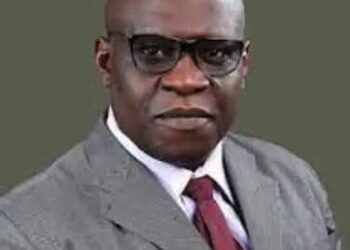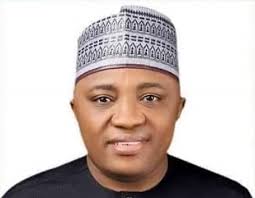





Jonathan Jibrin
At the Arise Igala Leadership Award/Lecture held on Saturday, 30th May 2026, in Abuja, the lead speaker, Bar. Jibrin Samuel Okutepa, SAN, delivered a thought-provoking and intellectually stimulating lecture on the political development of Igala land, with a robust flashback to our political trajectory. He placed particular emphasis on the Ukanukpoda Accord of December 1998, championed by the late Dr. Steven Makoji Achema.
The presentation was both profound and emotional. As Bar. Okutepa painstakingly chronicled the political journey of the Igala nation and highlighted defining moments in our history, many guests in attendance were visibly moved. The hall was gripped by a mixture of nostalgia, pride, and concern as memories of a generation of selfless leaders and patriots were rekindled. His erudite exposition did not merely revisit history; it challenged us to reflect on where we have come from, where we are today, and where we are headed as a people.
The lecture rekindled memories and reflections within me and compelled me to put down my thoughts on that historic event, having been privileged as a young man to witness it firsthand.
On 18th December 1998, a remarkable political event took place at Ukanukpoda, a historic gathering that would profoundly shape the political trajectory of the Igala people. Today, nearly three decades later, the significance of that meeting remains as relevant as ever, particularly at a time when our people continue to grapple with a deficit of visionary leadership, political cohesion, and collective purpose.
Political history across the world teaches us that alliances and accords are often forged to advance strategic interests. Such interests may be economic, religious, regional, or ethnic. The Ukanukpoda Accord was one such moment in which the political elite of Igala land consciously sought to place the collective interest of their people above personal and partisan considerations.
The events leading to the Accord were precipitated by the conduct of the Peoples Democratic Party (PDP) primaries of 1998. The outcome left many political stakeholders dissatisfied and prompted one of the most courageous political decisions ever taken by the late Dr. Steven Makoji Achema.
Following extensive negotiations that culminated in the emergence of Prince Abubakar Audu as the candidate of the All Peoples Party (APP), Dr. Achema saw an opportunity to demonstrate a political philosophy that would become his enduring legacy—the supremacy of the Igala Agenda over personal political gain.
The choice of Ukanukpoda as the venue was symbolic. Located at the heart of Igala land, it served as a fitting meeting point for leaders determined to chart a common course for their people.
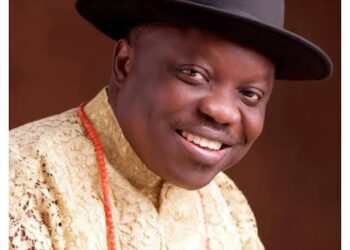
Present at the historic gathering were some of the finest political minds and community leaders of the era. Dr. Steven Achema led his delegation, which included notable personalities such as Pa Wada Ejiga, Chief James Unwuchola (OFR), Capt. Joe Agada, Barrister Humphrey Abah, Engr. Emma Uchola, Elder Mike Achimugu, Chief John Odawn, Hajiya Titi Alhassan (MAMSER), Ukubile Atanu, Charles Omatola, Timothy Omora, Sani Igonoh, Ayuba Agahiu, Alhaji Nuhu Audu, Dr. H.P.O. Ahmodu, Mr. Sunday Okayi, Ali Ogu, Mr. Godwin Abah (Kaska), Idris Husseini (HK), Jonathan Jibrin, and Alhaji Yahaya Isah Liberty, among others.
On the opposite side were Prince Abubakar Audu, Dr. Alex Kadiri, Hon. Dan Kadiri, Hon. Dave Apeh, Alhaji Salami Asta, Mallam Sani Ogu, Dr. Emmanuel Onucheyo, Mallam Adejo Ademu (Go Slow), Dr. Sule Odoma, and several other political leaders.
The discussions centred on a singular objective: the advancement of the Igala interest in the impending 1999 elections.
Dr. Achema and his supporters made a decision that many politicians of today would find difficult to contemplate. They chose to subordinate party loyalty to the broader interests of their people. Their support for Prince Audu was not unconditional. It was anchored on specific developmental demands, chief among them the relocation of the proposed Kogi State University from Kabba to Ayingba, as well as assurances of inclusiveness in governance.
What distinguished Dr. Achema was not merely his negotiating skills but his willingness to bear personal consequences for the convictions he held. In a public declaration broadcast on radio, he openly called on his supporters and the entire Igala nation to support Prince Audu and the APP candidate.
He took this position fully aware that the PDP was on course to assume power at the federal level under General Olusegun Obasanjo. Yet, he proceeded because he believed that the future of his people was more important than his personal political advancement.
History would later suggest that this decision cost him the opportunity of a ministerial appointment, as accusations of anti-party activities were reportedly levelled against him by influential interests. Yet Dr. Achema never wavered. He accepted the sacrifice and remained steadfast in his convictions.
That singular act elevated him beyond the status of an ordinary politician. It transformed him into a statesman.
His untimely death in a tragic motor accident, while engaged in party-building efforts for the Igala people, deprived the nation of one of its brightest political minds. However, death could not extinguish the ideals he represented. The Achema Philosophy—placing the collective good above personal ambition—remains one of the most enduring political doctrines to emerge from Igala land.
THE CHALLENGE BEFORE US TODAY
The fundamental question confronting us is simple: What became of that spirit?
Why does it appear increasingly difficult for contemporary leaders to make sacrifices for the common good?
Why have personal ambitions replaced collective aspirations?
Why has transactional politics overshadowed patriotism?
The Igala nation today faces challenges that are not entirely different from those that confronted our forebears. We are confronted by declining political influence, growing insecurity, economic hardship, youth unemployment, and a noticeable erosion of our collective bargaining power.
Yet, the greatest challenge may well be the absence of a shared vision.
The years following the passing of Dr. Steven Achema witnessed a gradual departure from the bideals that defined his politics. The Ujache Spirit—anchored on sacrifice, courage, patriotism, and collective responsibility—slowly gave way to a culture of political opportunism. Men who found themselves in positions of authority often lacked the conviction and sense of mission that distinguished the generation of Ukanukpoda.
Rather than producing patriots committed to advancing the Igala cause, we increasingly celebrated accidental politicians whose primary concern was personal political survival. Leadership became less about service and more about access. The collective interest was subordinated to individual ambition, while political relevance was measured by proximity to power rather than by tangible benefits secured for the people.
The consequences have been profound. A people blessed with one of the most formidable population blocs in Kogi State have, paradoxically, seen their political leverage diminish. Our numerical strength, which ought to have been our greatest asset, has become less significant because it is no longer driven by a coherent agenda or guided by a united leadership. We have often approached critical political decisions as fragmented interests rather than as a people with a common destiny.
More troubling is the fact that some of those entrusted with our mandate have willingly accepted subordinate roles in political arrangements where the Igala nation ought to have been negotiating from a position of strength. Too often, collective aspirations have been exchanged for personal accommodation. Too often, temporary gains have been preferred to enduring benefits. Too often, those who should defend our interests have become comfortable playing second fiddle while the influence and bargaining power of our people continue to diminish.
This was not the philosophy of Ukanukpoda.
This was not the creed of Steven Makoji Achema.
Dr. Achema demonstrated that true leadership sometimes demands personal sacrifice. He understood that the worth of a leader is measured not by the offices he occupies but by the causes he is willing to defend. He believed that no personal ambition should supersede the collective interest of the Igala nation.
Today, more than ever before, we must honestly interrogate ourselves. Have we remained faithful to those ideals? Have we preserved the political philosophy that inspired the Ukanukpoda Accord? Have we produced leaders willing to sacrifice for the common good, or have we settled for those who merely seek to benefit from the system?
The lesson of Ukanukpoda is that no people can advance when their leaders place personal gain above collective destiny. Equally, no people can reclaim their rightful place when they abandon the values that once made them strong.
The challenge before us, therefore, is not merely political. It is moral. It is a challenge to revive the Ujache Spirit, restore the culture of patriotism, and rebuild a leadership tradition founded on courage, vision, sacrifice, and an unwavering commitment to the Igala cause.
THE NEED FOR AN IGALA CONCLAVE
Perhaps the time has come for the Igala nation to revisit the spirit of Ukanukpoda.
There is an urgent need for a non-partisan Igala Conclave—a gathering of traditional rulers, political leaders, professionals, academics, business leaders, youth representatives, women groups, and other stakeholders to honestly examine the future of our people.
Such a platform should transcend political parties and individual ambitions. Its purpose should be to define a clear and actionable Igala Agenda for the next generation.
Questions concerning security, education, economic development, infrastructure, political representation, cultural preservation, and leadership succession must be collectively addressed.
The Igala nation has reached a point where destiny can no longer be left to chance. We must consciously decide what kind of future we desire and what sacrifices are required to attain it. A people who fail to define their agenda will inevitably become spectators in the agendas of others.
No nation advances by accident. Progress is usually the product of deliberate planning, strategic thinking, and collective commitment.
THE UJACHE SPIRIT MUST RISE AGAIN
Despite the challenges before us, there remains hope.
The resilience, courage, and determination that have historically defined the Igala people have not disappeared. The Ujache Spirit remains alive in our communities, among our youths, and in the hearts of countless patriots who continue to believe in the greatness of our nation.
What is required is leadership that inspires confidence, commands trust, and is willing to make sacrifices.
The story of the Ukanukpoda Accord is therefore not merely a historical account. It is a reminder. It is a challenge. It is a call to duty.
As another political season unfolds, we must resist every temptation to mortgage our collective future for temporary benefits. We must reject the politics of compromise without purpose and embrace the politics of vision, sacrifice, and patriotism.
The generation before us left examples worth emulating. The responsibility now rests upon us to determine whether we shall merely celebrate their memories or courageously uphold the ideals for which they stood.
May the spirit of Dr. Steven Makoji Achema and other fallen patriots continue to inspire the Igala nation towards unity, progress, and purposeful leadership.