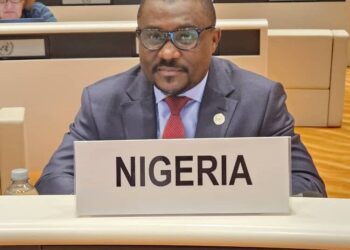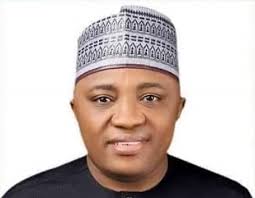



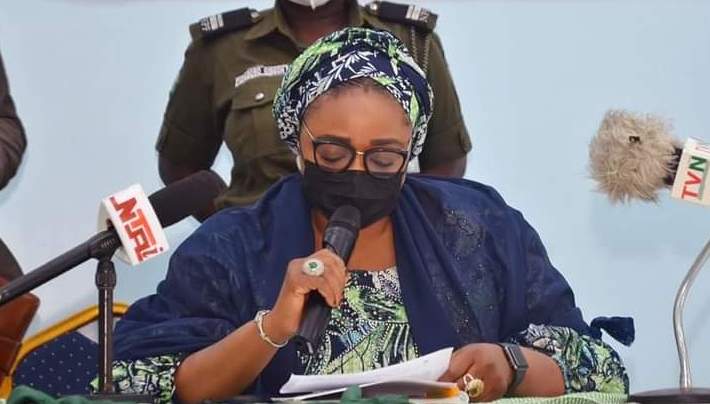
The minister noted that this year’s theme is a call to accelerate progress, deepen partnerships, and to translate commitments into tangible action
by Zainab Adewale
The Federal Government has reiterated its commitment to eradicating Female Genital Mutilation (FGM) in Nigeria, calling for urgent and collective action to protect millions of girls and women from the harmful practice.
In a statement issued on Thursday to mark the International Day of Zero Tolerance for FGM, the Minister of Women Affairs, Imaan Sulaiman-Ibrahim, described FGM as a “serious violation of human rights” that requires immediate intervention.
Ms Sulaiman-Ibrahim said today is a call for urgent, collective, and sustained action to protect the rights, dignity, and future of millions of girls and women in Nigeria and across the world.
Female genital mutilation comprises all procedures that involve partial or total removal of the external female genitalia, or other injury to the female genital organs for non-medical reasons.
According to the World Health Organisation (WHO), girls who undergo genital mutilation face short-term complications such as severe pain, shock, excessive bleeding, infections, and difficulty in passing urine, as well as long-term consequences for their sexual and reproductive health and mental health.
As of 2022, Nigeria accounts for the third highest number of women and girls who have undergone FGM worldwide, with an estimated 19.9 million survivors, according to UNICEF.
While the national prevalence among women aged 15-49 dropped from 25 per cent in 2013 to 20 per cent in 2018, prevalence among girls aged 0-14 increased from 16.9 per cent to 19.2 per cent in the same period.
WHO also projected that 27 million girls could experience this gross violation by 2030 if efforts are not made to curb this harmful practice.
Time for action
The International Day of Zero Tolerance for FGM is commemorated annually on 6 February to raise awareness about the harmful practices.
Ms Sulaiman-Ibrahim noted that this year’s theme, ‘Step Up the Pace: Strengthening Alliances and Building Movements to End FGM,’ “speaks to the urgency of our efforts.”
She said it is a call to accelerate progress, deepen partnerships, and to translate commitments into tangible action.
She noted that FGM is not merely a cultural practice but a fundamental breach of human dignity, “a direct assault on the health and well-being of women and girls, and a significant impediment to sustainable development.”
The minister emphasised that the consequences of FGM are profound and far-reaching, including “physical complications such as hemorrhage, infections, complications in childbirth, psychological trauma and in extreme cases, death.”
She noted that beyond individual suffering, the practice negatively deprives communities of their full economic and educational opportunities for women and girls.
“FGM is a fundamental violation of human rights,” she said, stressing that it impedes Nigeria’s progress toward the Sustainable Development Goals (SDGs), particularly those relating to health and wellbeing, quality education, gender equality, and decent work and economic growth.
Strategy to end FGM
As part of its ongoing efforts to combat the practice, the Federal Ministry of Women Affairs, in collaboration with the Federal Ministry of Health, UNFPA, UNICEF, and other stakeholders, is implementing the National Policy and Plan of Action on FGM Elimination.
The minister outlined key activities planned for this year’s campaign, including an advocacy walk to the National Assembly to push for stronger legal frameworks criminalising FGM and increased funding for anti-FGM programmes.
She said the activities also includes a visit to Jigawa State, a high-risk area for FGM, to engage the community and religious leaders in efforts to abandon the practice, strengthen surveillance and reporting mechanisms, and mobilise grassroots organisations and youth-led movements for change.
Mrs Sulaiman-Ibrahim emphasised that the fight against FGM requires collaboration across multiple sectors, including government, civil society organisations, traditional and religious institutions, private sector, the media, and young people.
“Let us ensure that no girl in Nigeria—no girl anywhere—is subjected to this harmful practice. The time for action is n
ow. Together, let us #UNITE2ENDFGM,” she said.
(Premium time)